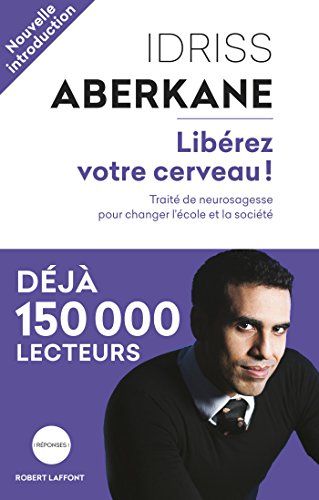
Our brain is greater than all its creations. So it is not up to our brain to adapt to our creations, but the other way round. From medicine to politics, from marketing to education, applying this principle means changing ourselves… and changing the world. Today our society handles a gigantic quantity of knowledge and yet produces very little wisdom. And a civilisation that produces a great deal of knowledge without wisdom is doomed to self-destruction. In particular, the book deals with neuroergonomics, the science that studies the brain at work.
From school to the office, and throughout the city, the potential of this new science is immense, both socially and economically. The book describes our brain precisely: its abilities, its limits, its blind spots, and the known ways of making the best use of it. Recent cases show just how much room for improvement there is in the way we use our brain: mental calculation prodigies manage to work out the thirteenth root of a hundred-digit number in under four seconds.
Yet they have the same brain as us! So the difference lies in the way they use it, and in particular in their ability to spread the cognitive load across several functions of their mind. Idriss Aberkane explains how we could all master this ability.
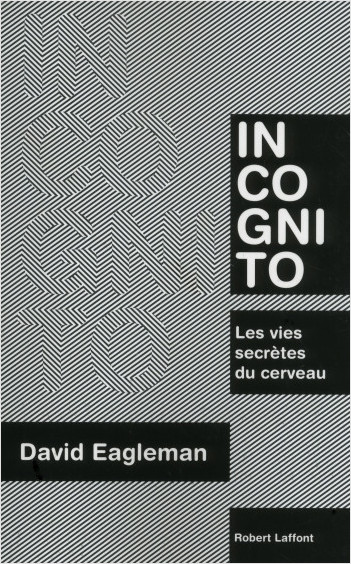
Our brain works… incognito. Indeed, what we do, think and believe often stems from parts of our brain that we cannot access, from activity we are not aware of. But if consciousness is only the tip of this iceberg, what lies beneath?
In this book, David Eagleman probes the depths of the unconscious. Behind the “I” that often believes it is in charge lies a considerable mass of data, coupled with masterful processing (of all that data) – all of it carried out, most of the time unconsciously, by billions of neurons and their many connections.
Take what we consider natural gifts, such as our ability to make out a rainbow, or to catch our own name in a conversation we are not following: they are in fact the result of remarkable neural, biological and cognitive circuitry.
All in all, it is a fascinating, crystal-clear journey into the unconscious.
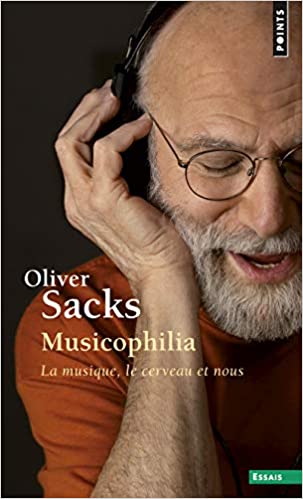
Music can move us to the very depths of our being, make us want to dance, or leave us sad and nostalgic. When you are a neurologist as accomplished as Oliver Sacks – open, like him, to many other disciplines, and above all a lifelong music lover – how can you understand and describe this power?
More areas of the brain are devoted to processing music than to processing language: humans are truly a musical species. Many examples prove it, recounted by Sacks with his trademark power and talent: from the surgeon struck by lightning who suddenly becomes a pianist at the age of forty-two, to Wittgenstein’s one-armed pianist brother, by way of music-loving people with intellectual disabilities.
Music is medically beneficial: it brings movement to people with Parkinson’s who are unable to move, soothes patients with Alzheimer’s disease and even manages to restore memories to some people with amnesia.
Here our musical dimension is described in all its breadth and depth, from a scientific, philosophical and spiritual point of view.
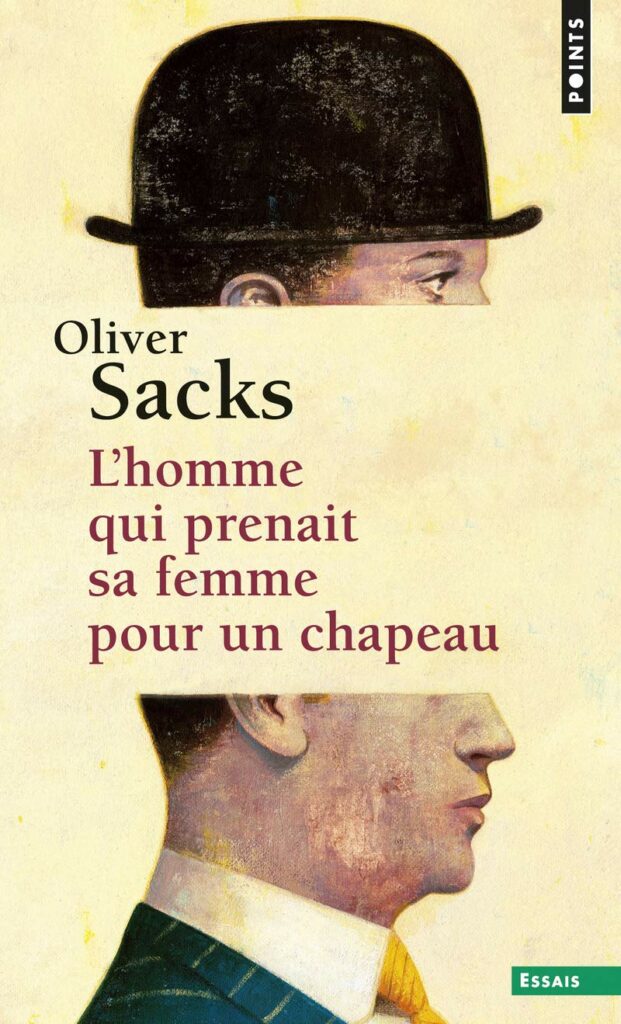
Oliver Sacks’s The Man Who Mistook His Wife for a Hat tells the stories of people afflicted by fantastic perceptual and intellectual aberrations: patients who have lost their memory, and with it most of their past; who can no longer recognise people or ordinary objects; who are seized by violent tics and grimaces, or who blurt out obscenities against their will; who have been cast aside because of certain delays, yet possess astonishing artistic or mathematical gifts.
However unimaginably strange they may be, these brilliant stories remain profoundly human in Dr Sacks’s superb and compassionate telling. They are studies of life, battling against extraordinary adversity.